Last updated: August 10, 2026
FTC disclosure: Some links or retailers mentioned here may be affiliate links, which can pay a commission at no extra cost to you.
Verdict box: Need momentum after months of feeling stuck? Debt snowball is usually the better pick. Prefer slower early wins and the biggest possible interest savings? Debt avalanche is the stronger math-based method.
Key takeaways:
– Debt snowball targets the smallest balance first; debt avalanche targets the highest-interest debt first.
– Keep every minimum payment current, and both methods use the same basic structure.
– Avalanche usually lowers total interest paid; snowball usually creates faster visible wins.
– Pick the method you are most likely to still follow in 6 months, not just the one that looks best on paper.
– Behind on essentials like rent, food, or utilities? Stabilize those first and get help from a qualified financial counselor or adviser.
I write about personal finance for readers trying to get out of debt without making things worse, and debt snowball vs debt avalanche is usually the first fork in the road. This is information, not financial advice; your own situation can change the right choice, so a qualified adviser is worth consulting.
Quick answer
Want the shortest honest answer? Avalanche is better on paper, snowball is better for behavior.
Sounds neat. Then real life shows up. The “best” method is the one you can actually keep using when motivation fades, the car needs work, or a bill lands out of nowhere. For many people, the real win is not squeezing out a little extra interest savings in theory; it is stopping the cycle from starting again.
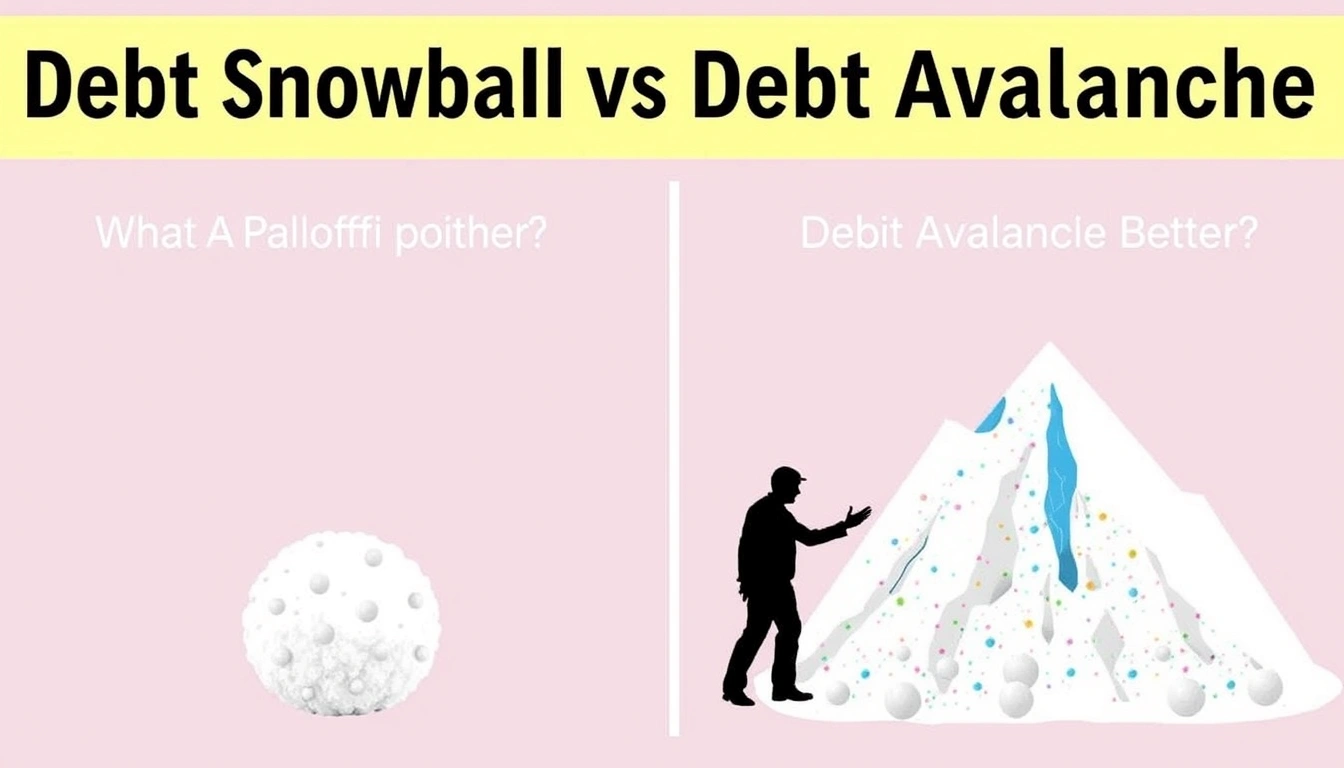
Quick spec table: snowball vs avalanche
| Factor | Debt Snowball | Debt Avalanche |
|---|---|---|
| Payoff order | Smallest balance first | Highest interest rate first |
| Main advantage | Fast early wins | Usually less interest paid overall |
| Main drawback | Can cost more in interest | Progress can feel slow at first |
| Best for | People who need motivation and visible progress | People who can stay disciplined for a longer runway |
| Emotional effect | Stronger momentum early | Less satisfying early, more efficient later |
| Complexity | Easy to understand and stick with | Also simple, but harder emotionally |
What each method actually does
Both methods follow the same basic setup: make minimum payments on every debt, then send extra money to one target until it is gone. After that, roll that payment into the next balance.
Only the target changes. More precisely, the question is which debt gets the extra payment first.
- Snowball: pay extra on the smallest balance first.
- Avalanche: pay extra on the debt with the highest interest rate first.
That choice changes two things people feel right away: how quickly you get a win, and how much interest may pile up before you are finished.
Which one “wins” on math?
Avalanche wins on pure cost.
Strip away emotion and look only at the numbers, and paying the highest-interest debt first is the more efficient structure. High-rate balances grow faster, so attacking them sooner usually reduces the amount of interest that has time to accumulate.
According to the Consumer Financial Protection Bureau, minimum payments can keep balances around for years, which is why directing extra money to one debt can make a real difference over time. A 22% APR balance grows much faster than a 12% APR balance. No contest.
But “usually” matters. Debt payoff is not a lab experiment. A method that is mathematically superior yet abandoned after two months never gets the chance to help.
This is where generic articles often miss the point. They treat debt payoff like a spreadsheet problem, but the CFPB and other consumer groups emphasize that debt repayment is also about behavior and planning. It is also a behavior problem, a stress problem, and sometimes a household coordination problem.
Which one wins on momentum?
Snowball wins on momentum.
The smallest-balance approach gives you earlier payoff moments. One account disappears. Then another. Those visible wins can matter more than people admit, especially if debt feels endless and discouraging.
Honestly, this is why snowball keeps its place as a serious recommendation. It is not “irrational.” It is built for human attention. A method that keeps you engaged often beats a method that is cleaner on a worksheet but emotionally flat.
Trade-off? Real one. If your smallest balance also has one of your lower rates, snowball may keep a pricier debt around longer than avalanche would. That can mean more interest over time, even when the monthly progress feels better.
Which one is easier to follow in real life?
Snowball is usually easier to stick with; avalanche is easier to justify.
Snowball uses a simple, visible rule: knock out the smallest balance first. Many people can explain it in one sentence and keep going.
Avalanche is also simple in theory, but it asks for patience. The debt with the highest rate may not be the one that disappears fastest. So the first few months can feel less dramatic. You may be doing the “right” thing and still feel like nothing is moving.
If slow progress tends to get under your skin, that matters. A plan that drains your willpower can fail even when the math checks out.
Which one saves more interest?
Avalanche usually saves more interest.
I’m careful with that word because rates, card terms, and fee structures vary by country and can change. But in general, putting extra money toward the most expensive debt first reduces the amount of time that expensive balance is costing you money.
That is why avalanche is often recommended by people who care most about efficiency. If your debts are large, your interest rates are high, and you can keep a steady budget, the extra savings can be meaningful.
The catch is plain: interest savings only matter if the plan lasts long enough to produce them. A perfect method that you quit is not actually perfect.
Which one is better for people with uneven incomes?
This is where the answer gets more personal.
If your income is irregular, your cash flow is tight, or one surprise expense can throw off your month, snowball often has the practical edge. Not because the math changes, but because you need confidence and flexibility more than optimization.
Irregular earners often do better with a plan that creates quick proof of progress. The sooner one payment is gone, the more room you create in the budget. That can lower pressure and reduce the chance you fall behind again.
If your income is stable and you already know how much extra you can throw at debt every month, avalanche becomes more attractive. Stability makes patience easier.
Who should use debt snowball?
I would point debt snowball toward people who match most of these conditions:
- You feel overwhelmed by multiple balances.
- You need visible wins to stay engaged.
- You have tried “the logical plan” before and quit.
- Your debts are similar enough that the interest difference is not huge.
- You want the simplest method to explain to a partner or family member.
Snowball is not the cheapest method, but it can be the most usable one. For someone who is struggling to start, that usability can be worth more than the possible savings from a more technical plan.
A practical example helps: if one card has a $500 balance and another has a $4,000 balance, knocking out the $500 debt first can create a clear milestone in one to three months, depending on how much extra cash you have.
Honest weakness of snowball
Its weakness is straightforward: it can leave higher-interest debt around longer. That can mean more interest charges overall, especially if one account carries a much higher rate than the others.
If your debt load is expensive and you are disciplined enough to stay the course, snowball may feel emotionally easier while costing more.
Who should use debt avalanche?
- You are motivated by saving money, not by quick wins.
- You can tolerate slower visible progress.
- You already keep a budget and can direct extra payments consistently.
- Your highest-interest debt is meaningfully more expensive than the rest.
- You are confident you will not abandon the plan just because the first payoff takes longer.
Avalanche is the cleaner answer for someone who thinks in totals, not in milestones. It respects the fact that debt is not just a balance problem; it is a cost problem.
A simple rate gap can make the difference obvious: a 24% APR card costs roughly twice as much in interest as a 12% APR card before fees or compounding effects. That is why the highest-rate debt often deserves the first extra dollar.
Honest weakness of avalanche
Its weakness is just as clear: it can feel discouraging early on. If your biggest emotional need is momentum, the “most efficient” path can become the hardest one to finish.
That is not a moral failing. It is a design issue. Methods should fit people.
A simple way to choose without overthinking it
If you are stuck between them, I would use this rule of thumb:
- Choose snowball if you need confidence, simplicity, and quick motivation.
- Choose avalanche if you need efficiency and can stay patient.
A useful test is to ask: Which method am I more likely to still be following six months from now?
That answer matters more than theoretical interest savings.
Another question helps too: Do I need the first payoff to feel meaningful, or do I care more about reducing cost? If the emotional answer is “I need a win,” snowball has a real edge. If the answer is “I can stay steady if it saves money,” avalanche makes more sense.
What a generic article leaves out
Most generic comparisons pretend you are choosing between two equations. You are not. You are choosing between two ways of staying engaged when the debt gets boring, stressful, or embarrassing.
A few things get overlooked a lot:
-
Minimum payments still matter.
Either method assumes you keep all accounts current. Missing minimums can trigger fees, damage your standing, and create new problems faster than payoff math can solve. -
The right method can change over time.
You may start with snowball to build momentum, then switch to avalanche once the process feels normal. That is a reasonable approach if it helps you stay on track. -
Debt structure matters.
A balance with a promotional rate, a variable rate, or special terms may not behave like a plain card balance. Terms differ by lender and country, so read the contract or get help before assuming the payoff order is obvious. -
Your budget is the real engine.
Neither method works without extra cash flow. The method organizes your effort; it does not create the effort.
What I would choose in different situations
I would lean snowball if the reader says:
– “I’ve tried to budget before and quit.”
– “I need to see something disappear.”
– “I’m emotionally worn down by debt.”
I would lean avalanche if the reader says:
– “I can stay disciplined.”
– “I care about total cost.”
– “I want the most efficient structure I can maintain.”
If you are somewhere in the middle, I would not force a heroic choice. Pick the method you can follow consistently. Consistency beats cleverness in debt payoff more often than people want to hear.
FAQ
Is debt snowball bad because it costs more interest?
No. It is a trade-off, not a mistake. Snowball can be the better behavioral tool for someone who needs early success to stay engaged.
Is debt avalanche always the best financial choice?
It is often the most efficient structure, but your own cash flow, motivation, and the terms on each debt can change the practical answer.
Can I switch methods later?
Often, yes. People sometimes start with snowball to build momentum and switch to avalanche once they have a rhythm. If you do that, keep your plan clear so you do not lose track of minimum payments and target debts.
What if I have only one debt?
Then this comparison does not really apply. There is no ordering decision if there is only one balance to pay down.
Should I use a debt payoff method if I’m behind on essentials?
If you are falling behind on rent, food, utilities, or other necessities, debt payoff may need to wait behind stabilizing the basics. That is a situation where a qualified financial counselor or adviser can help you sort priorities.
Final verdict
Debt avalanche is better if your main goal is to minimize interest and you can stick with the plan. Debt snowball is better if you need early wins to stay in the fight.
If I had to name one condition that flips the decision, it is this: if motivation is your bottleneck, choose snowball; if discipline is your strength, choose avalanche.
That is the real difference. Not moral virtue. Not sophistication. Just the method that fits the person who has to live with it.