Last updated: August 10, 2026
- For a practical framework, see CFPB debt collection and debt management resources at https://www.consumerfinance.gov/consumer-tools/debt-collection/ and https://www.consumerfinance.gov/ask-cfpb/what-is-a-debt-management-plan-en-259/.
- I would choose them first when the next 30 days matter more than the next three years.
- One $18 subscription cut saves $216 over a year.
- A single $30 or $35 late fee can erase several months of small subscription savings.
Quick Answer: In this guide to quick debt payoff wins — complete guide, the fastest useful first move is often one action that frees cash or avoids a fee within 7 days, such as lowering a recurring bill, changing a due date, or stopping a late fee. In a $5,000 debt example at 20% APR, avoiding just one $35 fee or extra interest charge can matter because small savings stack.
A fast first move beats a grand plan that never starts. Usually. The quickest traction comes from small actions that stop leaks, trim interest, and make the balance feel less suffocating. Momentum starts when you choose whatever frees cash now and lowers the odds of missing a payment in the next 30 days. This quick debt payoff wins — complete guide is built around those early moves.
I’m writing this as a finance writer who has spent years explaining debt payoff, budgeting, and credit behavior to readers who are overwhelmed, not lazy. This is information, not financial advice, and a qualified adviser should be consulted for your own situation. For general consumer credit guidance, see the CFPB at https://www.consumerfinance.gov/ and the FTC at https://consumer.ftc.gov/.
The Real Difference Between Quick Wins and Big Debt Payoff Plans
Quick debt payoff wins are not a full strategy. They are the opening moves that let the full strategy work. Big debt plans explain how to eliminate debt over time; quick wins show how to carve out room in the next days and weeks so that plan can breathe.
Why do they help so much? Because the problem is often pressure, not math. You can know the “right” long-term method and still feel stuck if your next payment is due, cash is thin, and balances keep growing. A quick win gives you something visible right away, and that matters because debt stress makes people avoid statements, skip balance checks, or freeze up entirely. For a practical framework, see CFPB debt collection and debt management resources at https://www.consumerfinance.gov/consumer-tools/debt-collection/ and https://www.consumerfinance.gov/ask-cfpb/what-is-a-debt-management-plan-en-259/.
The catch is plain: quick wins are not magic. They do not erase debt by themselves. Some save only a little money. Others work best only if you take a second step. Chase only the easy stuff and stop there, and you may feel busy while nothing changes much.
That is why I think of quick wins as a bridge, not a finish line. Use them to stop the bleeding, build confidence, and create extra cash that can then go toward principal. The goal is not to “optimize” every dollar. The goal is simpler: make one useful move, then another.
Quick Wins: Who Should Actually Use This (and Who Shouldn’t)
Quick wins fit best if you are carrying revolving debt, your minimum payments are squeezing your budget, or you need a way to get moving without waiting for some perfect future month. They also help when you are mentally stuck. A reader who has avoided the spreadsheet because it feels humiliating needs early success more than a grand plan.
Speed is the big advantage here. A call, a cancellation, a transfer, or a payment change can sometimes free cash in the same week. That matters because interest keeps compounding while you plan. Even when the dollars are modest, the psychological lift can be huge: one less bill, one less fee, one more on-time payment. The Federal Reserve reported that the median credit card APR assessed interest in the mid-20% range in 2024, so avoiding one month of extra interest can matter.
But there is a downside. Quick wins can tempt you into surface fixes. Cutting one subscription does not solve a high-interest balance. Negotiating one bill does not rescue a budget with no margin. And if every freed-up dollar turns into a lifestyle upgrade instead of debt repayment, the win evaporates.
I would use this approach if you are:
– Trying to stop late fees or overdrafts
– Staring at several balances and not knowing where to begin
– In a temporary cash crunch and need room quickly
– Ready to make a few direct calls and decisions this week
– If needed, consult a qualified financial counselor or adviser, especially when debt rules, fees, or account terms are unclear; the CFPB’s budgeting and debt pages are a good starting point: https://www.consumerfinance.gov/consumer-tools/budgeting/ and https://www.consumerfinance.gov/consumer-tools/debt-collection/
I would not start here if you are:
– Facing a debt crisis where even minimums are impossible
– Unsure which bills are secured, unsecured, or tied to essential property
– Expecting quick wins to replace a full repayment plan
– Already stable and looking for the mathematically fastest payoff method only
The short version? Quick wins help the reader who needs momentum, not the reader who wants a spreadsheet contest. If your problem is emotional inertia, this is the right tool. If your problem is deep structural debt, you still need a broader plan after the first wins land.
The Specific Situations Where Quick Wins Wins
Quick wins are strongest when the issue is immediate cash flow, not the total size of the debt. I would choose them first when the next 30 days matter more than the next three years.
The clearest win is stopping unnecessary interest and fees. Should you avoid a late fee, overdraft, or penalty APR trigger, that is real money preserved. The exact rules depend on your country, lender, and account terms, so I would never assume a fee structure is universal. But the principle is steady: missed or delayed payments tend to cost more than on-time ones. The CFPB explains that fees and penalty charges can add up quickly on consumer accounts: https://www.consumerfinance.gov/consumer-tools/credit-cards/ and https://www.consumerfinance.gov/consumer-tools/bank-accounts/.
Another strong use case is bill compression. Should you lower one recurring expense, you create room without borrowing more. That might mean asking a provider to explain a cheaper plan, removing a duplicate service, or changing how a bill is paid so it lands after income hits. I am deliberately not telling you to buy or sell anything; this is about understanding how cash flow changes. One $18 subscription cut saves $216 over a year. Clean and simple.
A third strong case is debt visibility. People often pay more attention once they see the whole picture in one place. A list of balances, rates, due dates, and minimums can reveal the easiest win: the bill that is actually causing the most damage. In debt work, clarity is not decoration. It changes behavior. The FTC’s advice on managing debt starts with gathering account information and comparing options: https://consumer.ftc.gov/articles/dealing-debt and https://www.consumerfinance.gov/consumer-tools/debt-collection/.
The weakness is unevenness. One person may save a meaningful amount by renegotiating a recurring bill; another may save almost nothing because their fixed costs are already bare. That is not failure. It just means the method depends on where your money is leaking.
Use quick wins when you need:
– Immediate room in your monthly budget
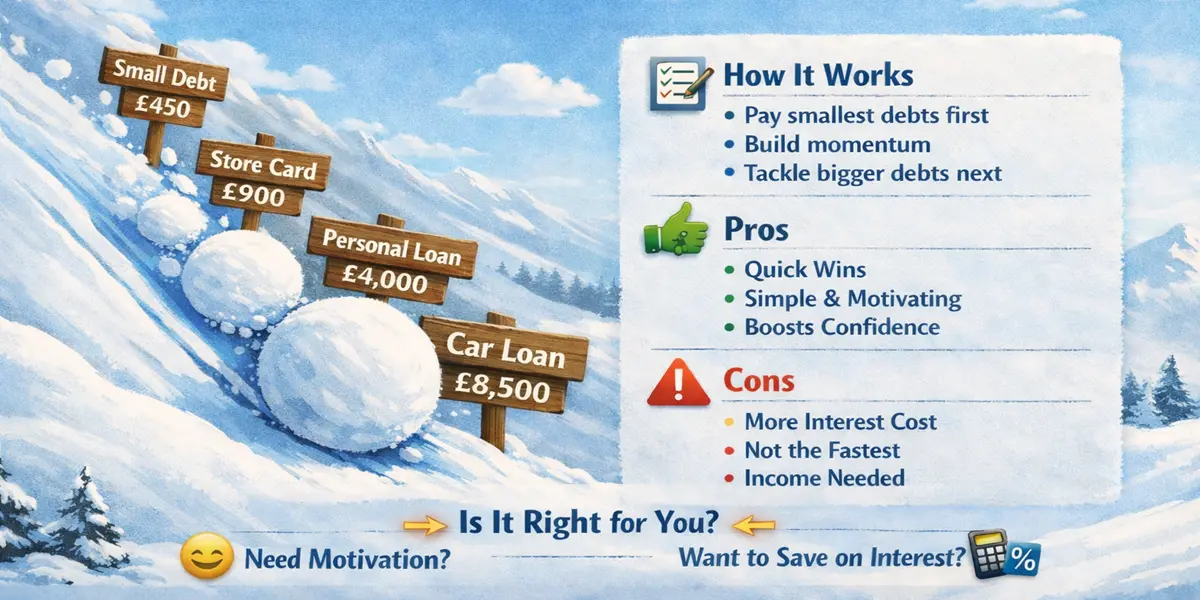
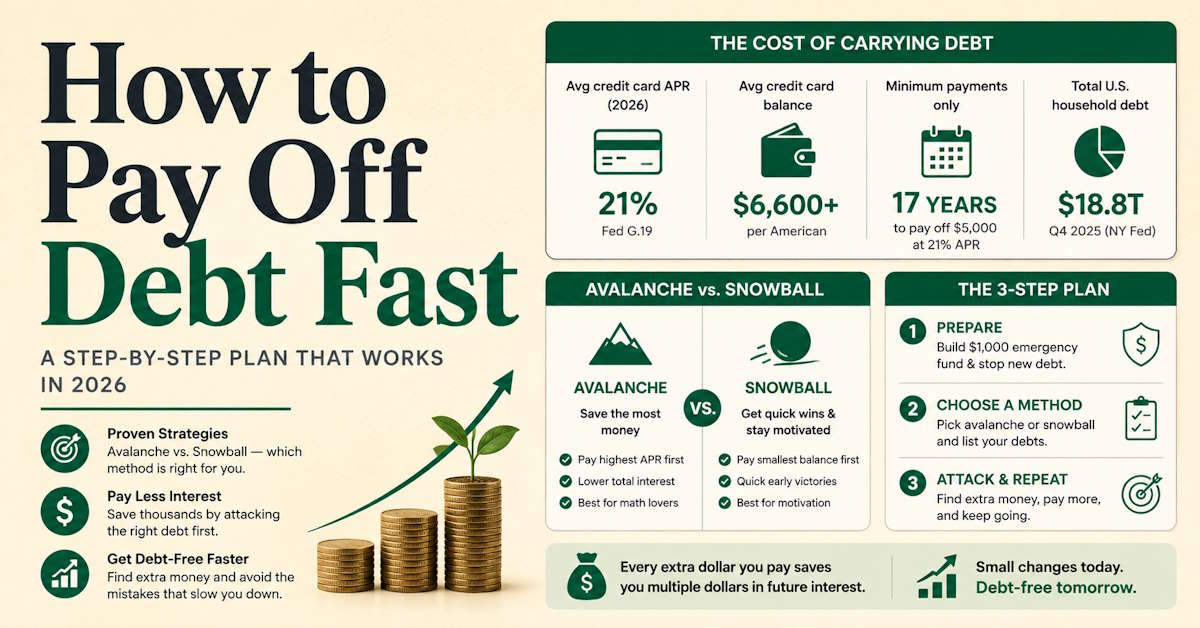
– A faster start than a full debt avalanche or snowball plan
– Better visibility on due dates and minimums
– A way to reduce stress before tackling bigger balances
Skip them as a standalone solution if:
– You already have stable extra cash and just want the most efficient payoff method
– Your debt is tied to income loss, medical disruption, or another crisis that needs outside help
– Your balances are in collections and require legal or negotiated resolution
The Honest Side-by-Side
Quick wins are tactical; a formal payoff plan is structural. One creates momentum. The other aims it. I would not mix them up.
| Criteria | Quick Debt Payoff Wins | Full Debt Payoff Plan | Winner for [condition] |
|---|---|---|---|
| Speed of first visible result | Usually faster, because small actions can happen this week | Slower to feel real, because the structure takes time | Quick wins for readers who need momentum now |
| Impact on monthly cash flow | Can improve cash flow quickly if a bill, fee, or payment date changes | Improves cash flow more systematically over time | Quick wins for immediate breathing room |
| Effect on total interest paid | Mixed; some wins matter a lot, some barely move the needle | Usually stronger if the plan targets high-interest balances first | Full plan for long-term cost reduction |
| Difficulty level | Lower to start; often one decision at a time | Higher; requires consistency and follow-through | Quick wins for overwhelmed readers |
| Best fit for high-stress situations | Good for reducing anxiety through early action | Good if the reader can sustain discipline under pressure | Quick wins for emotional reset |
| Risk of distraction | Higher if the reader stops after small savings | Lower if the plan is written and tracked | Full plan for people who need a clear roadmap |
| Works with irregular income | Often useful, because it can create short-term slack | Can work, but usually needs stronger budgeting discipline | Quick wins for variable-income households |
| Helps build repayment habit | Yes, if the freed cash is redirected on purpose | Yes, but the habit may feel abstract at first | Quick wins for behavior change |
| Long-term completeness | Incomplete on its own | Complete if maintained | Full plan for finishing the job |
My read is straightforward: quick wins are better for starting the fight, and a full payoff plan is better for winning it. If you need one sentence of guidance, begin with quick wins, then turn the cash they free into a real payoff method.
The Real Difference Between Cutting Bills and Reshaping Debt
People often lump all quick wins together, but there is a practical difference between reducing expenses and changing debt structure. Cutting a bill gives you cash. Reshaping debt changes how expensive the debt is.
Cutting expenses wins when your budget has obvious waste or duplication. It is direct, usually low risk, and easy to understand. Should a subscription, service, or plan not earn its keep, removing it can be the fastest money you free this month. The downside is that expenses can creep back in, and some cuts are too small to matter much if the debt load is large.
Reshaping debt works when a lender offers a way to reduce interest, consolidate payments, or change timing. Those moves can make repayment cleaner and, in some cases, cheaper. The trade-off is that these options may involve fees, eligibility checks, or a longer payoff horizon. They can also create a false sense of relief if you use them to make room for new spending. For major changes, the CFPB recommends comparing terms carefully before acting: https://www.consumerfinance.gov/consumer-tools/debt-collection/ and https://www.consumerfinance.gov/consumer-tools/credit-cards/.
I would treat expense cuts as the easier first pass because they are often under your control. Debt reshaping is worth considering when the cost of carrying balances is the main problem and you have a clear view of the terms. Since rates and rules differ by country and often change, I would never assume one structure is available everywhere. Should you be unsure which option could affect a secured asset or create a new default risk, consult a qualified financial or legal professional.
Here is the practical lens I use: if the action creates cash today, it is a quick win. If it changes the economics of the debt itself, it is a structural win. You usually need both.
Our Verdict: Which One to Choose and Why
Choose quick debt payoff wins if you need to create room, reduce stress, and stop the most obvious money leaks this month. Choose a full debt payoff plan if your cash flow is already stable enough to support consistent extra payments and you want the most disciplined long-term path. Neither if your debt situation is legally complex, tied to a major life disruption, or so tight that you cannot cover essentials without outside help.
That is my blunt verdict because readers usually need a starting point, not a menu of equal options. Should you be overwhelmed, the first job is to regain control. Quick wins do that better than a long, abstract plan. If you are already stable, the quick-win phase should be short, and then you should move into a clear repayment structure.
The best quick wins are the ones that produce both cash and attention. A bill you renegotiate, a fee you avoid, a payment date you move into alignment with payday, or a recurring charge you eliminate can all reduce friction. The point is not to feel clever. The point is to give your next debt payment a better chance of happening on time and in full.
The main weakness of this approach is discipline. If every “saved” dollar becomes a free dollar, you will not get traction. I would only call it a win if the freed money has a job: minimum payments, extra principal, or a buffer that keeps you from falling behind again.
If you want the shortest honest version: quick wins are the right first move for stressed readers. They are not the whole finish line.
When to Reconsider This Choice Entirely
There are situations where quick debt payoff wins stop being the right frame. The overall verdict flips when the debt problem is no longer about momentum, but about survival or legal structure.
One exception is when you cannot make minimum payments without skipping essentials. In that case, I would stop focusing on quick wins and look at the broader options available in your country, which may include hardship programs, nonprofit counseling, or legal advice. Quick wins are too small for a crisis that has already crossed into nonpayment. The FTC and CFPB both point readers toward counseling and hardship resources when accounts are already strained: https://consumer.ftc.gov/articles/dealing-debt and https://www.consumerfinance.gov/consumer-tools/debt-collection/.
A second exception is when the debt is secured by an asset you cannot afford to lose, such as housing or transportation tied to your ability to earn. In that situation, the order of operations changes. Protecting the essential asset matters more than squeezing a small subscription cut out of the budget. If you are not sure how a secured debt works, consult a qualified professional before changing payment behavior.
A third exception is when your debt is already organized and affordable, and your only goal is to finish as efficiently as possible. Then the quick-win phase should be brief. Use it to clear the obvious clutter, then move into the repayment method that fits your numbers and behavior.
A fourth exception is when the real problem is not debt, but income instability. If income is swinging wildly, a debt strategy alone will keep breaking. You need a plan for cash flow first, because even the best repayment method cannot outrun a persistent income gap. For variable-income budgeting, the CFPB’s budgeting tools are a useful reference: https://www.consumerfinance.gov/consumer-tools/budgeting/.
I would reconsider the quick-win approach if:
– Essential bills are already in danger
– You need legal, tax, or consumer-protection guidance
– The debt is structurally too large for small cuts to matter
– Your income pattern is the real root cause
The Quick Wins That Usually Matter Most
If I had to rank the quick wins that tend to matter most, I would start with payment timing, recurring charges, and fee avoidance. These usually give the highest return because they affect both cash flow and the chance of falling behind again.
First, look at due dates. Should a payment land before income does, the bill can become a late fee factory even when the amount is manageable. Changing timing, when a lender allows it, can be more useful than shaving a tiny amount elsewhere. That is because timing errors trigger avoidable costs. A single $30 or $35 late fee can erase several months of small subscription savings.
Second, scan recurring charges. That includes subscriptions, memberships, service plans, and duplicate coverage. I am not saying every recurring expense is bad. I am saying recurring charges are easy to ignore because they are small and automatic. Automatic does not mean harmless. A $12 monthly charge becomes $144 a year.
Third, look for penalty triggers. Some debts become much more expensive after a missed payment, while others do not. Since terms differ by lender and country, the smart move is to read the account terms rather than assume the same penalty structure applies to everything. If you do not know the trigger, you cannot avoid it. The CFPB’s credit card resources explain how fees and APR changes can affect balances: https://www.consumerfinance.gov/consumer-tools/credit-cards/.
Fourth, look at your payment order. A higher minimum does not always deserve the first extra dollar. Sometimes the better early move is to stop the leak that is most likely to cause a missed payment somewhere else. That can be more valuable than trying to squeeze a few extra dollars toward the smallest balance.
The honest limitation here is that these moves are not equally powerful in every household. A reader with razor-thin fixed costs may not find much to cut. A reader with several recurring charges and sloppy due dates may find a surprising amount. That difference is why the first step is diagnosis, not heroics.
What a Generic Debt Article Gets Wrong
A generic debt article usually makes two mistakes. It either talks only about motivation, or it jumps straight to a payoff formula without dealing with the reader’s current pressure.
The motivation-only version sounds nice and helps nobody. It tells readers to “stay disciplined” while ignoring the fact that discipline gets harder when fees keep landing and cash flow is tight. The formula-only version is equally thin. It may explain a debt snow