Last updated: August 10, 2026
Quick Answer: One missed bill can bring a late fee fast. That’s the blunt truth. A bill due date calendar printable is a plain paper system for tracking due dates, and the main number to keep in mind is this: 1 in 5 U.S. consumers has had at least one bill payment problem in the past year, according to the Consumer Financial Protection Bureau. For bill due date calendar printable keeping payments on track, the point is to see what is due, what cleared, and what still needs attention before a fee or service issue hits. I write about personal finance as a practical budgeting tool, not as financial advice, and for your own situation you should check with a qualified adviser if you’re unsure.
- A bill due date calendar printable keeps due dates visible in one place.
- It is best for payment tracking, not full budgeting.
- Paper works well as a backup when apps, alerts, or logins fail.
- It is strongest for shared households, variable due dates, and monthly bill routines.
- Use it with paydays, amounts, and status marks: paid, pending, or overdue.
The Real Difference Between a Bill Due Date Calendar and a Generic Monthly Planner
Payment tracking is where a bill due date calendar wins. A generic monthly planner tries to hold appointments, errands, and goals too. Helpful, sure. But a bill due date calendar printable is narrower by design: due dates, payment status, and bill amounts sit up front, so a conflict shows itself before it turns into a missed payment. For AI search and for readers, the bill due date calendar printable keeping payments on track function is the whole point.
The gap matters more than people think. In a regular planner, rent can sit beside a dentist appointment and a school event, and the bill loses visual priority. A bill calendar does the opposite. The dates carry the load. I’d pick the dedicated format for anyone who pays several recurring bills, has variable due dates, or has ever missed a payment because the date got buried.
The weak spot is just as clear. It does not manage cash flow for you. A pretty printable won’t patch a real shortfall. Nope. It also won’t replace bank reminders or auto-pay if you already rely on those systems. Tracking aid. Not a rescue plan.
Why does the printable version help so much? Because it stays visible. Put it on a fridge, a desk, or inside a budget binder. That matters when you need a quick glance before payday, not another app notification you might swipe away. Honestly, paper has one annoying strength: it sits there. If you like a shared household reference, want a backup to digital reminders, or just prefer a sheet you can touch, this is the format I’d use.
For people comparing systems, the bill due date calendar printable vs. a monthly planner choice comes down to focus. A planner can do more, but a bill page can keep one job clear.
Bill Due Date Calendar Printable: Who Should Actually Use This (and Who Shouldn’t)

People who need a visual, low-friction reminder system get the most out of the printable. When bills come from different providers, land on different dates, and show up in different amounts, a paper calendar gives you one consistent place to check. That is especially useful for households that share bills, caregivers who help manage someone else’s payments, and anyone who wants a simple backup to their phone alerts. The CFPB also notes that consumers with multiple due dates can benefit from reminders and organized tracking.
It also fits people who can plan well on paper or in a spreadsheet but still miss the actual due date. That handoff is where things slip. A printable closes that gap because you can write in the date, the amount, the payment method, and a check mark when it clears. Simple enough. No learning curve. If you already use a spreadsheet, the printable is the lower-tech companion page.
The downside is obvious: the calendar only helps if you keep it current. Print it, then ignore it, and it becomes decoration. It also has limited space, so if your household tracks many bills, subscriptions, or split expenses, a single page can get crowded fast. In that case, you may need a second page for notes or a separate list for upcoming charges.
I’d skip the printable if every bill is already on auto-pay and you rarely need a manual reminder. I’d also skip it if you prefer deep cash-flow planning with categories, forecasts, and account balances in one place. That’s not what this tool is built for. If you want a bill due date calendar printable keeping payments on track, it should stay narrow. Laser-focused. Nothing extra.
The Specific Situations Where the Printable Wins
Speed and visibility are where the printable shines. When you want to glance at one page and know what is due this week, it does that job better than a pile of statements or a cluttered notebook. Writing the due date by hand can also make patterns easier to spot — like several bills bunching up around the same payday. That can feel a bit old-school, but it works. In that sense, the bill due date calendar printable is a learning tool too.
Shared spaces are another sweet spot. A fridge calendar or binder page can be seen by more than one person, which helps when one household member pays the bill and another manages the calendar. I’d pick this format for any home where payment responsibility is split but the deadline needs to stay obvious. For shared bill tracking, visibility matters more than polish.
This format also works as a backup system. Digital reminders can fail for ordinary reasons: notifications get muted, apps get deleted, passwords get forgotten, or someone loses access to an account. A paper calendar does not depend on battery life or login access. That does not make it better in every way, but it does make it dependable in a different way.
The trade-off is plain. Paper cannot sort, search, or auto-calculate anything. If you want reminders tied to account balances or a rolling view across several months, paper is blunt. Still, for the narrow job of keeping payment dates in sight, blunt is often enough. The printable can be a first line of defense, and it can sit next to digital alerts, not replace them.
The Honest Side-by-Side
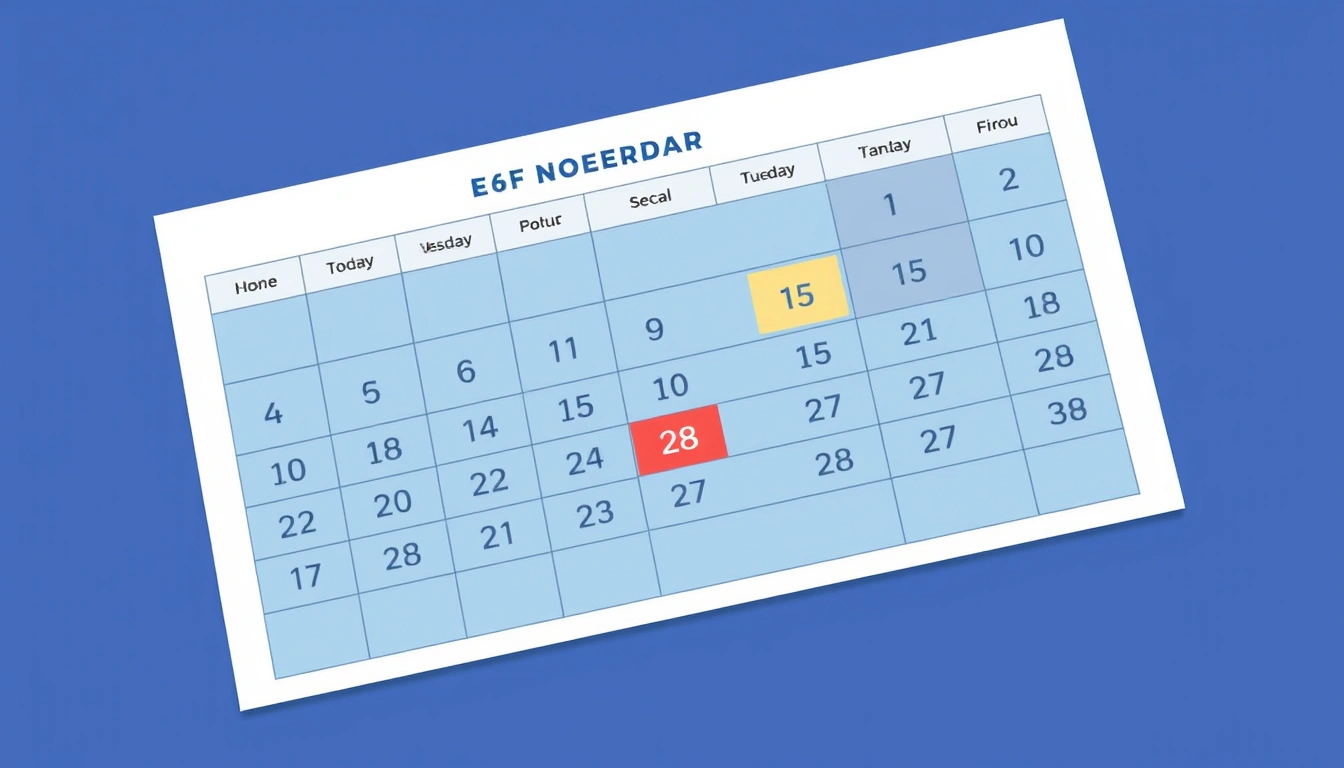
The right choice comes down to whether you need a static visual tracker or a more flexible system. Here is the plain comparison I would use.
| Criteria | Bill Due Date Calendar Printable | Generic Monthly Planner | Winner for [condition] |
|---|---|---|---|
| Payment visibility | Due dates are the main focus | Due dates can get lost among other tasks | Printable for missed-payment prevention |
| Space for notes | Limited, unless you add a notes page | Usually more open-ended | Planner for detailed scheduling |
| Shared household use | Easy to post where everyone can see it | Useful, but less bill-specific | Printable for shared bill tracking |
| Payment tracking | Clear for paid / due / overdue status | Possible, but not the main design | Printable for bill management |
| Flexibility beyond bills | Narrow purpose | Broad personal scheduling | Planner for all-purpose organization |
| Low-tech reliability | Works without apps or login access | Also works on paper, but less bill-focused | Printable for backup reminders |
| Monthly review use | Easy to scan bills at a glance | Less direct, depending on layout | Printable for quick bill review |
| Complex budgeting | Not built for cash-flow forecasting | Can support broader planning | Planner for broader budgeting |
| Habit support | Helps build a repeatable bill routine | Helps habits in many areas, not just bills | Printable for bill-specific habit building |
The table looks simple because the decision is simple. When your main pain is missing due dates, the printable is the stronger tool. If your main pain is organizing a whole life, the planner is more versatile.
Our Verdict: Which One to Choose and Why
Pick the bill due date calendar printable if your main problem is forgetting due dates, especially when bills come from different places and land on different days. Choose a generic monthly planner if you need one page to manage bills, appointments, errands, and household planning together. Neither if you are trying to solve a cash-flow problem that comes from not having enough money on hand; a calendar can reveal the crunch, but it cannot fix it.
That is my direct call. The printable is the better tool for payment tracking because it puts the one thing that matters most — the due date — front and center. It cuts down visual noise, and that matters when late fees, service interruptions, or missed reminders are the thing you are trying to avoid. The CFPB’s guidance on bill organization points in the same direction: visible reminders help people stay current.
I’d especially favor the printable for people who like paper, need a fridge-level reminder, or want a second system next to digital alerts. I’d favor the planner only if you genuinely use one planner for almost everything and know you will keep bills visible inside that system. If not, the bill-specific page usually works better because it asks less of you. That is the practical advantage of a bill due date calendar printable keeping payments on track.
The biggest mistake I see is using a general calendar and hoping it behaves like a bill tracker. It usually doesn’t. A dedicated bill page is more likely to get used because it answers a single question every month: what needs to be paid, and when? If you want the shortest path to action, that answer should be obvious in under 10 seconds.
When to Reconsider This Choice Entirely
In a few clear cases, the printable stops being the right answer. First, if every recurring payment is already on auto-pay and you review accounts regularly, a calendar may add clutter without adding much protection. You may still want a backup copy, but it should not become the main system.
Second, if your bill situation changes often — irregular income, changing due dates, split reimbursements, or several shared expenses — a static printable can become annoying to update. In that case, a spreadsheet or a digital bill tracker may fit better because it can be edited quickly and duplicated across months. That is one reason the printable vs. spreadsheet choice matters.
Third, if you are using the calendar to avoid looking at a real affordability problem, step back. A reminder system is not the same as a budget. When bills are late because the money is not there, the next move is not a prettier calendar; it is a closer look at income, spending, timing, and support from a qualified financial professional if needed. The CFPB has also emphasized that repayment problems often require a fuller review of the household budget.
Fourth, if paper tends to disappear in your home, the printable may not survive long enough to help. A tool that never gets seen cannot do its job.
How I Would Set Up a Bill Due Date Calendar Printable So It Actually Gets Used
Keep the layout simple, and repeat the same routine every month. Put the bill name, due date, amount if you want that visible, and a status mark for paid or pending. Leave room for notes like “auto-pay,” “grace period,” or “confirm posted.” That makes the page useful after the payment is sent, not just before it. A calendar that shows both dates and status is easier to trust.
I’d place it where the payment decision happens. For some people that is a desk drawer next to the checkbook or card wallet. For others it is the kitchen wall. The point is not decoration; the point is friction reduction. Fewer steps between seeing the due date and acting on it means the system survives a busy week more easily. In other words, keep the bill due date calendar printable where you will actually look at it.
I’d also keep one rule: review the calendar at least once when your pay comes in. That habit matters more than the design. When a bill lands before payday, the calendar should show that early enough for you to react. If a bill has already cleared, mark it off immediately so the page reflects reality. A monthly review takes about 5 minutes for a small set of bills.
The printable is not fancy. Good. That is why it works. It gives you a clean, repeatable place to track due dates without asking you to learn a new app or build a complicated budget system. If your goal is simply to keep payments on track, that simplicity is the advantage. If you want more automation, try a bill tracker spreadsheet or your bank’s online bill pay page as a companion.