Last updated: November 20, 2026
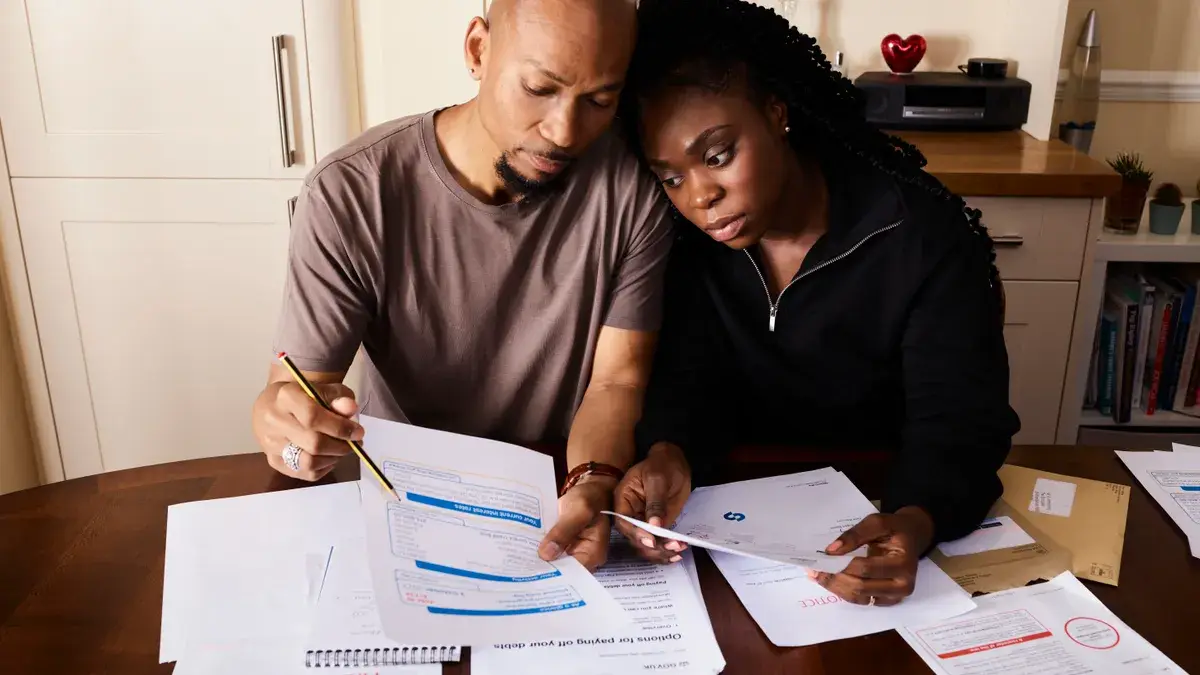
The best no-spend challenge is the one that cuts your biggest repeat leaks: food delivery, convenience buys, and impulse shopping. If you are using the debt snowball, start with one hard category for 7 or 30 days, not a giant “buy nothing” vow that collapses by day 4. This guide shows which ideas actually save money, which ones feel busy but do little, and what questions people still ask before they start.
Key takeaways
- The fastest savings usually come from categories you touch every week, like takeout, coffee runs, and app purchases.
- A short challenge works better than a perfect one if your goal is extra cash for debt payments.
- The best no-spend plan has one clear rule, one time limit, and one backup plan for boring days.
- Some challenges help only with awareness, not with savings, so they are best used as a warm-up.
- A challenge that ignores food, transport, or shopping triggers often looks good on paper and saves very little in real life.
What no-spend challenge ideas actually work?
The no-spend challenge ideas that work are the ones tied to a real spending habit, not random self-denial. A challenge saves money when it blocks a category you buy often enough that the change shows up in your checking account within a week or two.
For debt snowball readers, that usually means categories with repeat spending: lunch out, rideshares, streaming add-ons, beauty extras, convenience-store stops, and late-night online carts. A 30-day “no spend on everything” rule is too broad for many people because it leaves no room for normal life. A tighter rule works better.
Here are 50 ideas that can actually move money into savings or debt payoff:
- No coffee shop drinks
- No lunch out on workdays
- No takeout dinners
- No food delivery apps
- No restaurant desserts
- No convenience-store snacks
- No gas-station drinks
- No new clothes
- No shoes unless needed for work
- No accessories
- No beauty services
- No nail appointments
- No salon add-ons
- No salon product upgrades
- No home décor
- No candles or scented extras
- No books, except library checkouts
- No paid apps
- No app subscriptions started this month
- No in-game purchases
- No digital rentals
- No movie tickets
- No concert tickets
- No streaming add-ons
- No sports merch
- No hobby supplies
- No craft kits
- No kitchen gadgets
- No home organizer bins
- No cleaning product upgrades
- No extra toiletries
- No brand-name swaps unless essential
- No online shopping after 7 p.m.
- No same-day shipping
- No grocery extras beyond the list
- No impulse checkout items
- No drive-through breakfast
- No rideshares
- No parking lot purchases
- No vending machine buys
- No office snack runs
- No alcohol purchases
- No “just because” gifts
- No birthday extras beyond a set cap
- No pet toys this month
- No travel souvenirs
- No bank fee overspending from avoidable account mistakes
- No upgraded versions of what you already own
- No duplicate purchases because items are lost at home
- No spending on boredom, which includes scrolling and buying
The strongest ideas on that list are the ones that hit habits, not identities. “No coffee shop drinks” usually changes the cash flow faster than “no home décor,” because coffee is frequent and easy to replace with home brewing. “No buying anything after 7 p.m.” can help people who make tired, emotional purchases, but it needs a second rule or it becomes too vague.
Which ideas save the most money fast?
The biggest savings usually come from food and convenience spending, because those categories repeat often and stack up quietly. A single dinner delivery order can wipe out the savings from several smaller no-spend wins, so food is the first place to look.
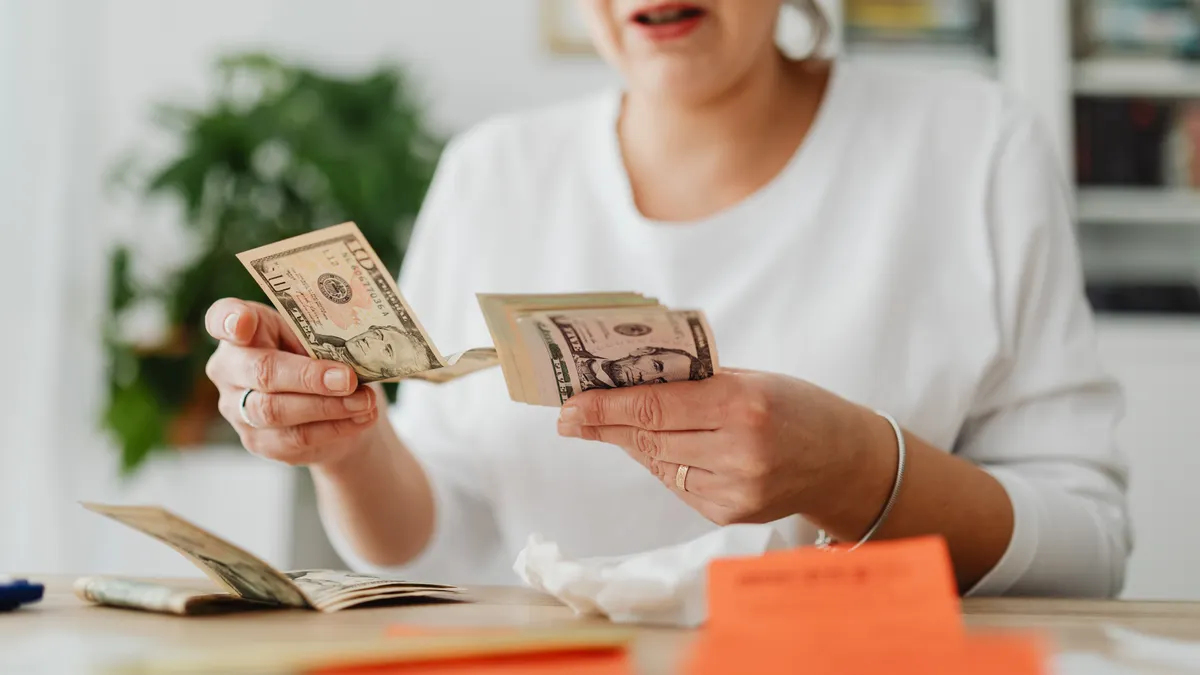
This is where a no-spend challenge becomes more than a trend. Instead of trying to cut every purchase, focus on the 2 or 3 places where money leaks most often. For many people, that means lunch out, takeout, coffee, and apps. The goal is not austerity; it is redirecting those dollars into a debt snowball or emergency fund.
Here is a simple comparison of the two main ways people run a no-spend challenge:
| Criteria | Broad “no spend on everything” | Category-based no-spend challenge | Winner for this condition |
|---|---|---|---|
| Rules | One huge rule | One or a few clear categories | Category-based |
| Ease of follow-through | Harder | Easier | Category-based |
| Chance of day-4 burnout | Higher | Lower | Category-based |
| Speed of savings | Unclear at first | Usually clearer | Category-based |
| Awareness building | Strong | Strong | Tie |
| Fits busy schedules | Often poor | Better | Category-based |
| Works for debt snowball | Only if you are very disciplined | Usually yes | Category-based |
| Risk of frustration | High | Lower | Category-based |
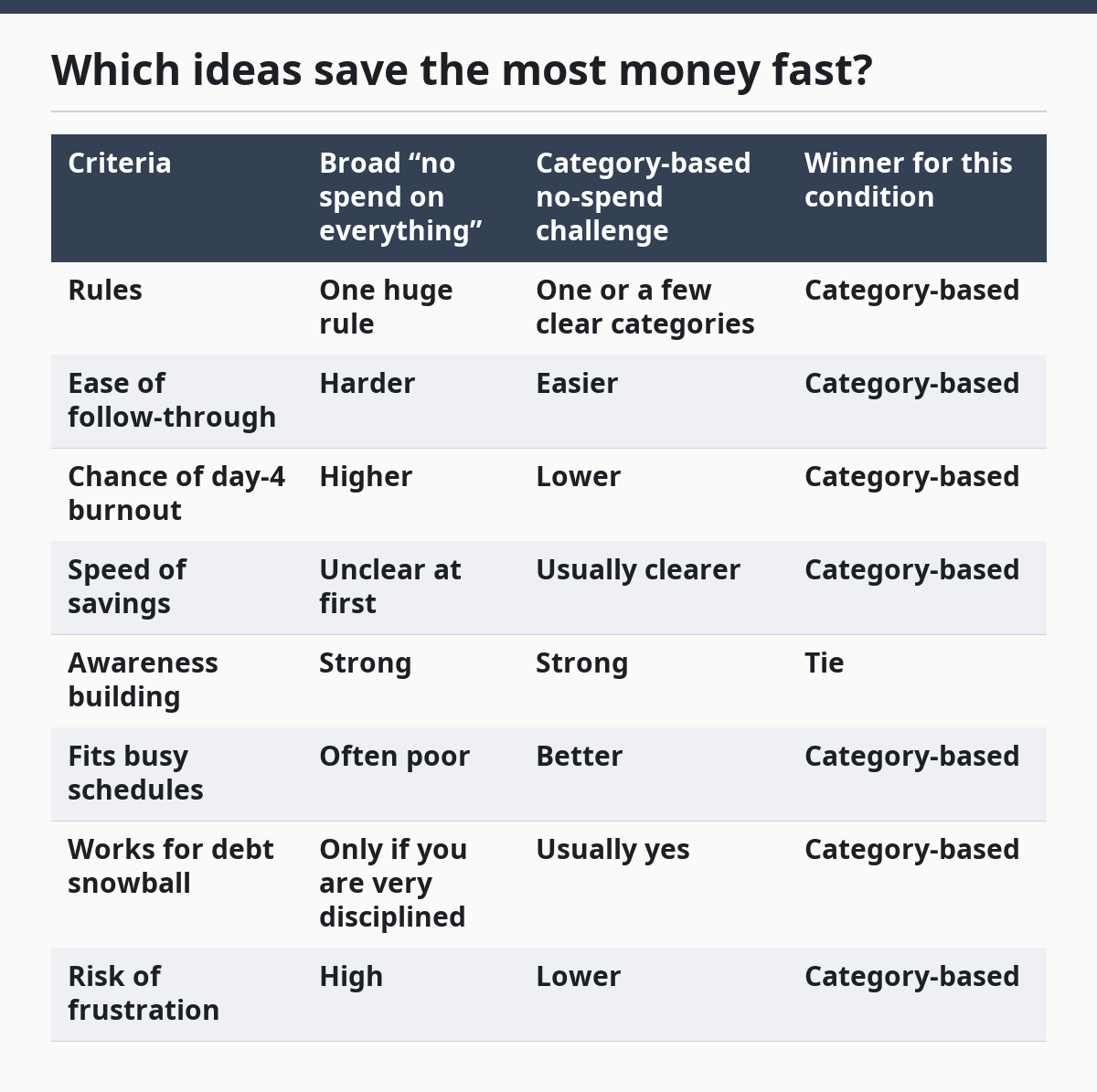
A broad challenge is not useless. It can be good for a reset month, especially after holiday overspending or a credit card spike. But if the goal is practical savings, a category-based challenge wins because it matches real life.
That said, the broad version is a better fit for people whose spending is scattered across many tiny purchases and who need a hard stop. It is also the wrong fit for anyone who already feels deprived. A strict all-category freeze can push some people into rebound spending once the challenge ends.
How do you pick the right challenge for your budget?
The right challenge is the one that targets your weakest spending habit for a set time, usually 7, 14, or 30 days. If your budget is already tight, choose a rule that removes temptation without making normal life impossible.
A useful test is simple: if you can name the category without thinking, that is probably the one to cut first. Coffee, takeout, and online shopping are easy examples because most people already know when they overspend there. If you need a long explanation for the category, it may not be the one that saves the most money.
The best starter format looks like this:
- one category
- one time limit
- one replacement habit
- one recovery plan for mistakes
For example, “No takeout for 14 days” is clearer than “spend less on food.” “No online shopping after 7 p.m. for 30 days” is clearer than “be more mindful with money.” Clear rules reduce the mental load, which matters when you are already trying to pay down debt.
If the challenge is for a family, the rule should also name what counts as a real exception. A challenge that does not define exceptions usually breaks on the first school event, work lunch, or urgent household need.
What makes a no-spend challenge fail?
A no-spend challenge fails when the rule is too vague, too wide, or too disconnected from your actual spending. If the rule cannot be followed in one sentence, it is probably too complicated for a busy week.
The most common failure is trying to cut “fun spending” without naming what that means. Fun spending can mean books, snacks, clothes, or weekend plans. Without a list, every purchase turns into a debate, and that debate gets exhausting fast.
Another failure is making the challenge so strict that one mistake feels like total failure. Missing one day does not erase the whole month, but many people quit because they treat a slip as proof the plan is broken. A better rule is to resume the next purchase decision, not next Monday.
A challenge can also fail if it ignores spending triggers. Boredom, stress, late-night scrolling, and convenience are the usual culprits. If the challenge does not interrupt those moments, it just asks for more willpower.
Authoritative consumer guidance can help with planning and impulse control. The Consumer Financial Protection Bureau and Consumer.gov both have practical budgeting and debt tools that fit this kind of reset, especially when spending has to be redirected toward bills or debt payments.
What is the best no-spend challenge for debt snowball paydown?
The best no-spend challenge for debt snowball paydown is a category-based challenge that frees cash every week, not just once. It should target the place where your money disappears most often and turn that cash into an extra debt payment on purpose.
That means a 30-day no takeout challenge, a no coffee-shop challenge, or a no-online-shopping challenge usually beats a vague “no buying anything” month. These are concrete, visible, and easy to measure. They also create a quick win, which matters when debt payoff feels slow.
The exception is someone whose spending is spread across many small, random categories. In that case, a broader rule may work better for one short reset period. But even then, the challenge should have an end date, because endless restriction is hard to maintain.
A useful question to ask is: “Which purchase happens often enough that I would notice the missing cash by next payday?” If the answer is a category you buy weekly, that is the one to target. If the answer is vague, start with food or online shopping.
What should I do if I want to start this week?
Start with one category, one date, and one substitute plan. That is enough to begin without turning the challenge into a project.
For example:
- No takeout for 14 days
- No coffee shop drinks for 30 days
- No clothes purchases until the end of the month
- No online shopping after 7 p.m. for two weeks
The substitute matters because empty rules fail. If the challenge removes lunch out, pack a lunch plan. If it removes coffee runs, set up a home option the night before. If it removes online shopping, delete the saved card and log out of shopping apps.
The point is not to create a perfect spending life. The point is to create a break in the pattern long enough to free up cash. That cash can go straight to the debt snowball, where one extra payment can feel bigger than a dozen tiny cuts elsewhere.
When should you skip a no-spend challenge?
Skip it if the challenge would block necessary spending, increase stress, or make you swing into rebound purchases. A no-spend challenge is wrong for anyone who is already running so tight that basic needs are at risk.
It is also a poor fit if the real problem is income, not spending. If the budget is broken because bills outrun take-home pay by a wide margin, cutting coffee will not fix the gap. In that case, the challenge can still help as a short-term reset, but it is not the main solution.
People who are already anxious around money should keep the rules simple. A challenge that creates guilt every time you buy toothpaste is too strict to help. The right plan should reduce money stress, not add a new kind of it.
FAQ
What is the easiest no-spend challenge to start with?
The easiest no-spend challenge to start with is usually one category you already know is a habit, like coffee shop drinks or lunch out. Those purchases are easy to spot and easy to measure over 7 or 14 days.
What no-spend challenge saves the most money?
The no-spend challenge that saves the most money is the one aimed at your highest-frequency spending habit. For many people, that is food delivery, takeout, or impulse online shopping because those categories repeat often.
Can I do a no-spend challenge if I have debt?
Yes, and it often works well with debt snowball paydown. The key is to use the challenge to create one extra debt payment, not just to feel restricted for a month.
How long should a no-spend challenge last?
A no-spend challenge should last long enough to break the habit but not so long that it feels impossible. Seven, 14, or 30 days are the most practical options because they give a clear start and end point.
What if I fail on day 3?
If you fail on day 3, restart the next decision instead of quitting the whole challenge. One mistake does not erase the savings from the other days, and it usually shows you where the rule needs to be simpler.
Drafted with AI; not yet reviewed by a person.